Last week I was lucky enough to attend the Explorations on Sound and New Media Art Conference 2026 hosted by the School of Arts, Universidade Católica Portuguesa, Porto, Portugal. The theme was ‘on territories: speculative practices, transgressing and belonging’.

I presented a paper entitled ‘No Fixed Terrain’ describing a prototype art work of the same name, building on previous research exploring real-time landscapes within a performed audiovisual context.
“No Fixed Terrain is a live interactive installation for two participants and a real-time generative landscape system, developed in TouchDesigner and driven by MIDI controller input. Building on an existing single-performer landscape generator, the work extends the system so that two participants — who need no musical training — each shape a distinct terrain layer, and its accompanying sound, through direct interaction with a MIDI controller. A third, non-human layer runs beneath both: historic environmental data plays back on its own fixed clock, indifferent to either performer’s input. This layer periodically reshapes the available ground for both terrains, compressing, flooding, or redistributing the space the participants are contesting.”
I received confirmation of acceptance in mid-September, giving me just a few weeks to develop the work, test it, and write the paper in time for the conference in early November. Inevitably, given the timescale, the resulting outcome is effectively a first stage prototype.
From a technical perspective, No Fixed Terrain uses Particle Operators (POPs) in TouchDesigner to render a landscape derived from procedural noise. Climate data was retrieved from ERA5 monthly dataset, available from Copernicus, the Earth Observation component of the European Union’s Space programme. 25 years of climate data for the UK region of East Anglia were extracted for the years 2000 to 2024.
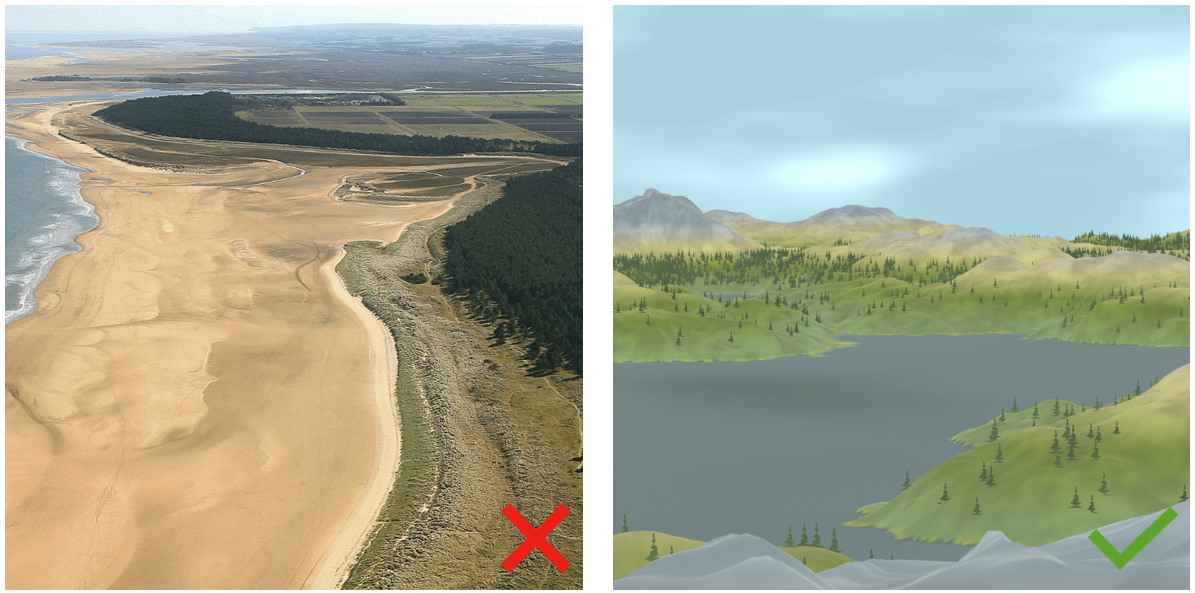
The data does not reconstruct East Anglia. Instead, it establishes conditions within a speculative landscape.
The sound design was conceived as a musical environment rather than a literal sonification of the climate data. Bass, arpeggio and percussion form three core musical layers, with the climate data determining the material selected within each layer. These establish an underlying musical structure that remains responsive to changing environmental conditions.
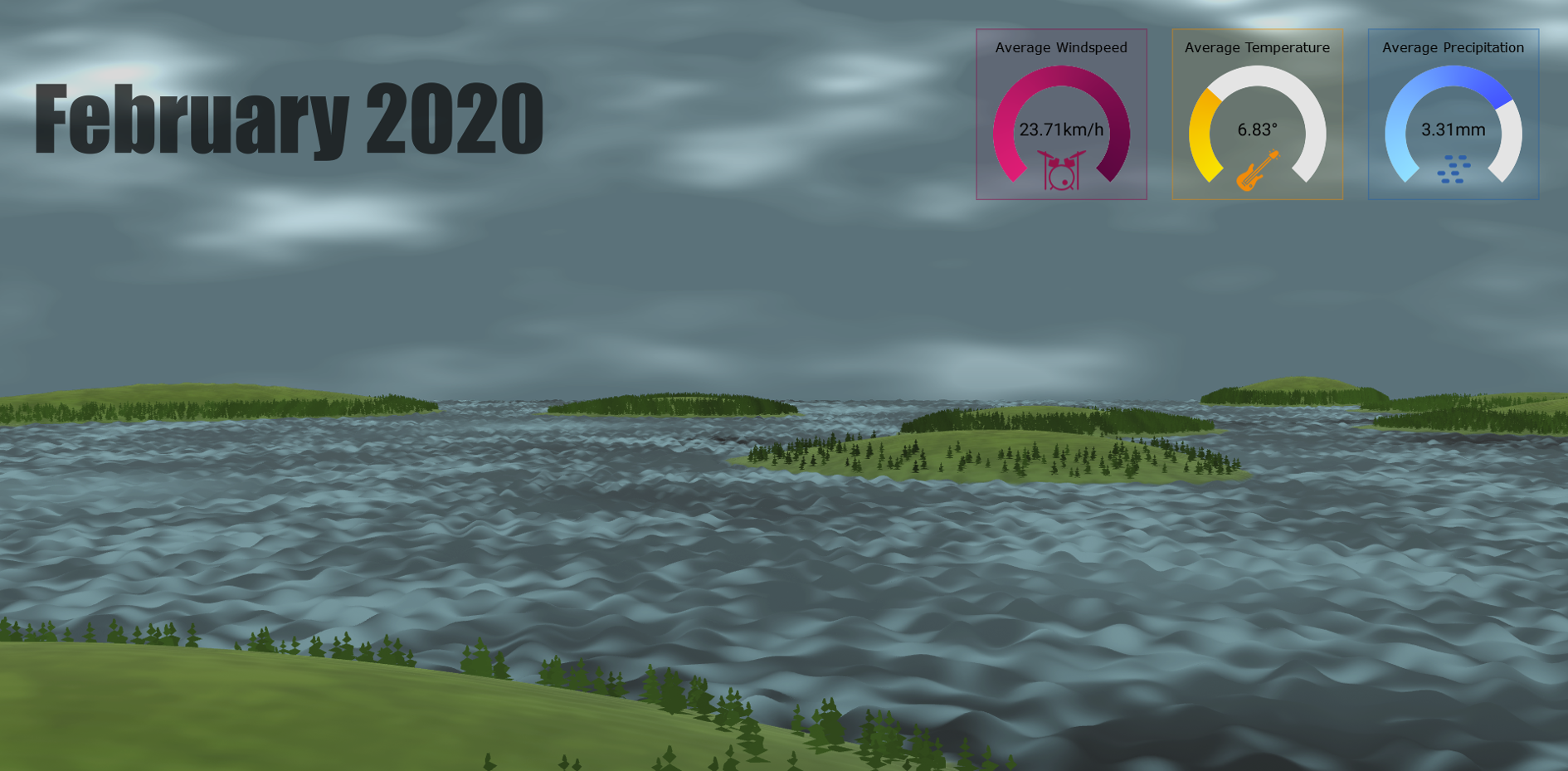
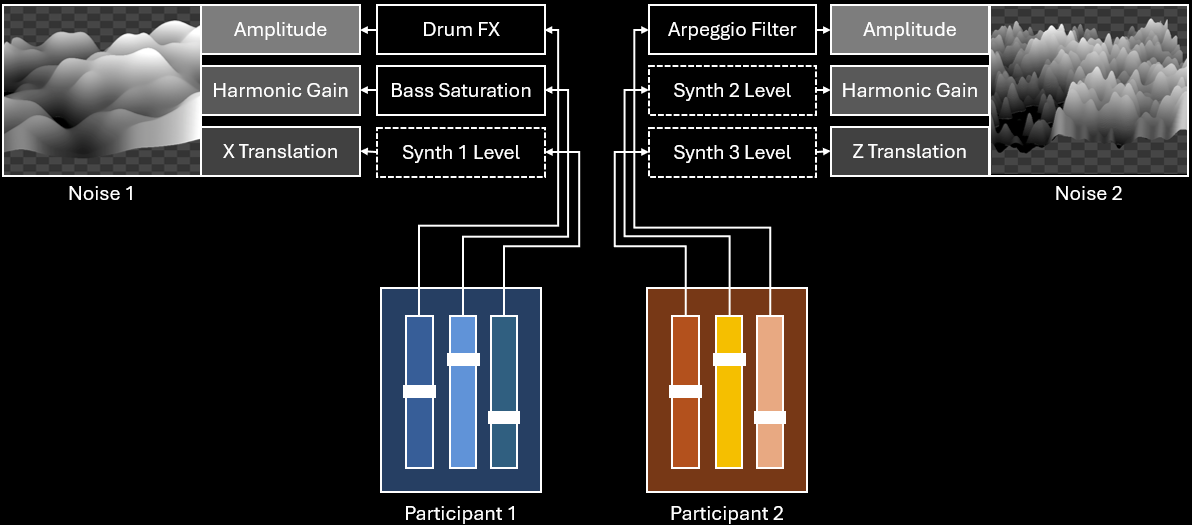
Each participant is given control over one part of the generative system. Their actions alter both the landscape and the sound, so visual and musical changes take place simultaneously. Neither participant has complete control over the resulting composition, and both are operating within environmental and musical conditions established by the climate data. Importantly, the participants are not simply responding to those conditions. They can manipulate the three core musical layers associated with temperature, precipitation and wind, and can also introduce three additional sounds into the composition. So there are different levels of agency within the system: the climate data establishes conditions, while the participants intervene within, modify and add to those conditions.
Formative user testing was undertaken to explore how participants understood and interacted with the work. Responses suggested that engagement increased as participants began to discover relationships between their actions, the terrain and the sound. One participant described the interaction as being “almost as a puzzle”, while another described the experience as becoming increasingly engaging and hypnotic.
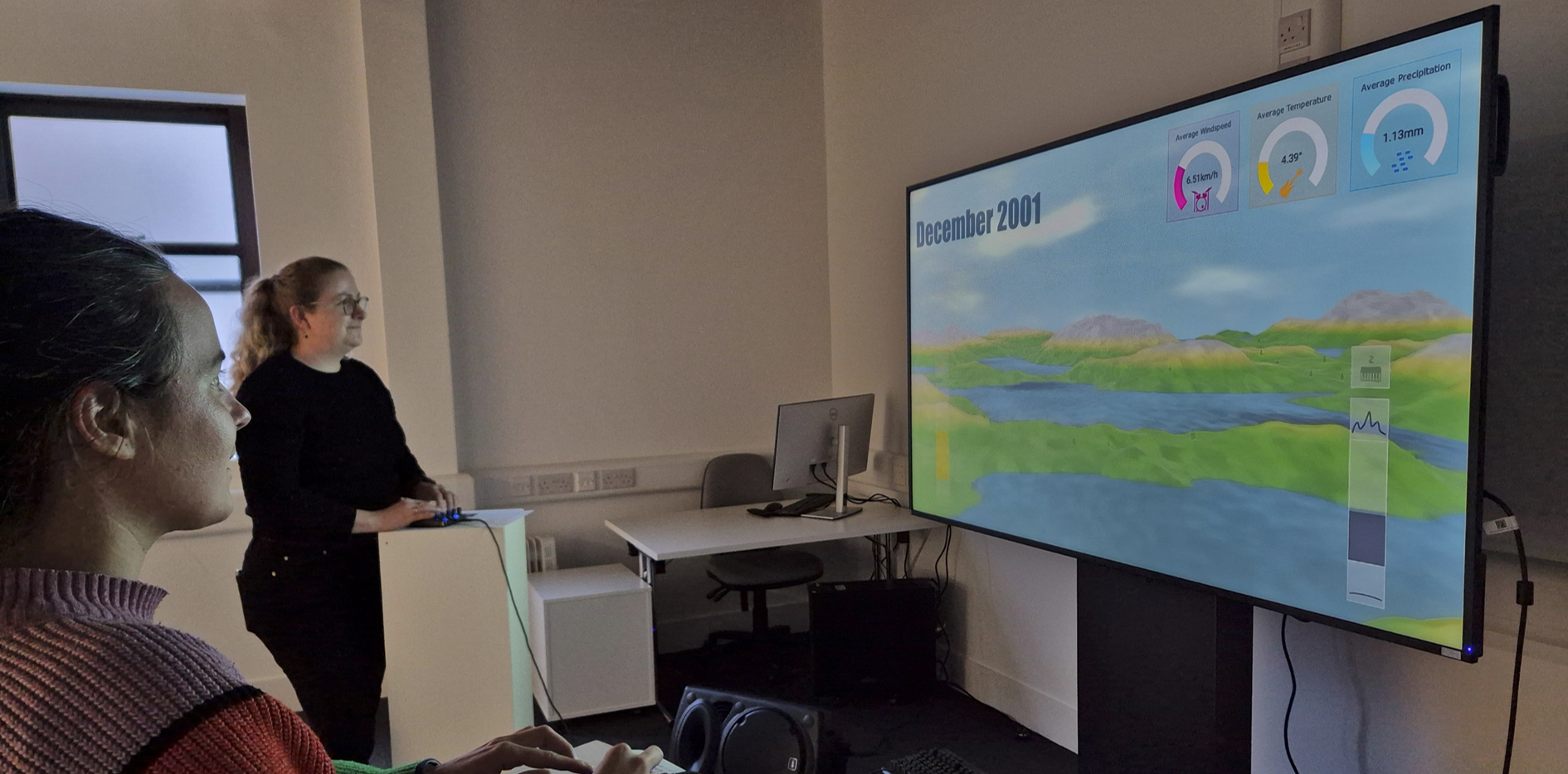

Ultimately, No Fixed Terrain explores what happens when environmental data moves from the background into the interaction itself. Participants can manipulate the landscape and its sound, but never have complete control over the conditions within which that interaction takes place.
I hope to develop this work further based on conference and testing feedback – watch this space!